How institutions, technology and communication shape public outcomes — and who is left out when they don't work.
Trajectory
Eight years across five sectors
I started in newsrooms — covering institutions, policy and public life at The Indian Express, Mirror Now and YourStory. That reporting training shaped everything since: how to make complex systems legible, how to find the gap between what an institution says and what it does, and how to explain that gap to people who are affected by it.
From there, the work moved into the systems themselves. Research on gender-based violence in South Asian media at UNESCO. Programme leadership across fourteen countries at CGAP South Asia. Policy communication inside the Government of India at the Ministry of Information & Broadcasting, where I wrote on AI governance, digital regulation and geospatial policy for a readership of over 250,000. Stakeholder and membership strategy at the Advertising Standards Council of India, where I built the engagement function from scratch.
Each move has looked like a different field from the outside. From the inside, it has been the same question in different institutional settings: how do institutions, technology and communication shape public outcomes — and who is left out when they don't work?
That question now lives in internet governance. As President of the Internet Society India Mumbai Chapter, I lead an all-women-led ICANN At-Large Structure, represent the chapter within APRALO, and hold governance roles across APrIGF and the Internet Society's global Accessibility Standing Group. My current work concentrates on platform accountability, AI governance, accessibility and technology-facilitated gender-based violence — with a particular focus on how Global South users and women in public life are served or failed by the systems built around them.
Lens
What I believe about this work
The internet is governed. The question is by whom, for whom, and whether the people most affected by those decisions have any seat at the table. Most of them don't — and that absence is not accidental.
I work to change that: by bringing underrepresented voices into governance processes, by building institutional infrastructure that makes participation possible rather than performative, and by producing the research, policy writing and public programming that makes these systems legible to the people they're supposed to serve.
I believe that governance without representation is administration. That accessibility is a governance question, not a technical one. That the safety of women in public life online is a policy failure, not a content moderation problem. And that the Global South deserves to shape the rules of the systems it lives inside, not merely comply with them.
Education
Education
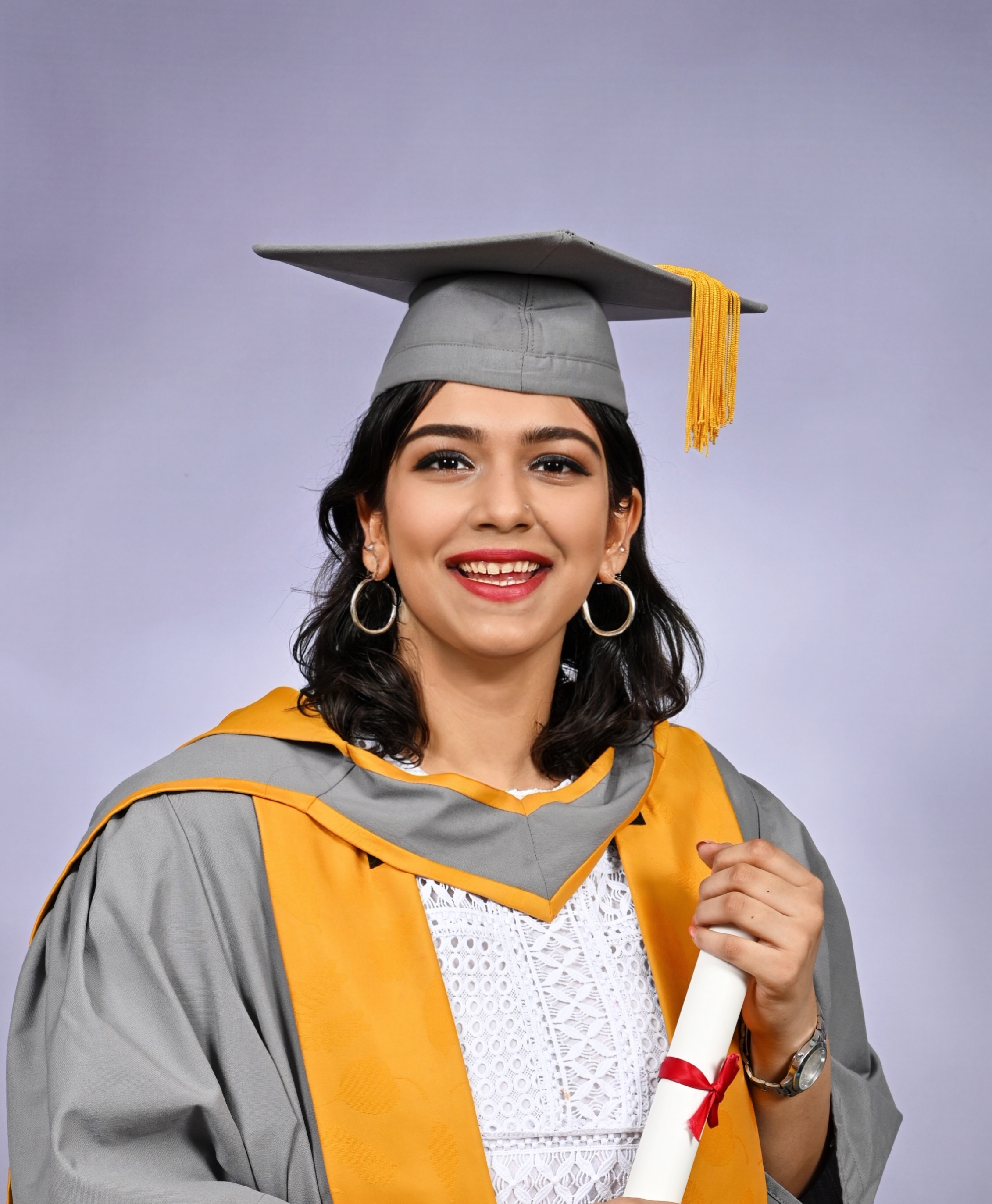
SOAS University of LondonMSc International Politics — SOAS University of LondonMerit. Dissertation on algorithmic bias.
PG Diploma in Broadcast Journalism — Asian College of Journalism, ChennaiDistinction.
BA (Hons) History — Maitreyi College, University of DelhiFirst Class.
My SOAS dissertation on algorithmic bias is the bridge between the academic training and the current work: politics → technology → power → platforms → governance.